
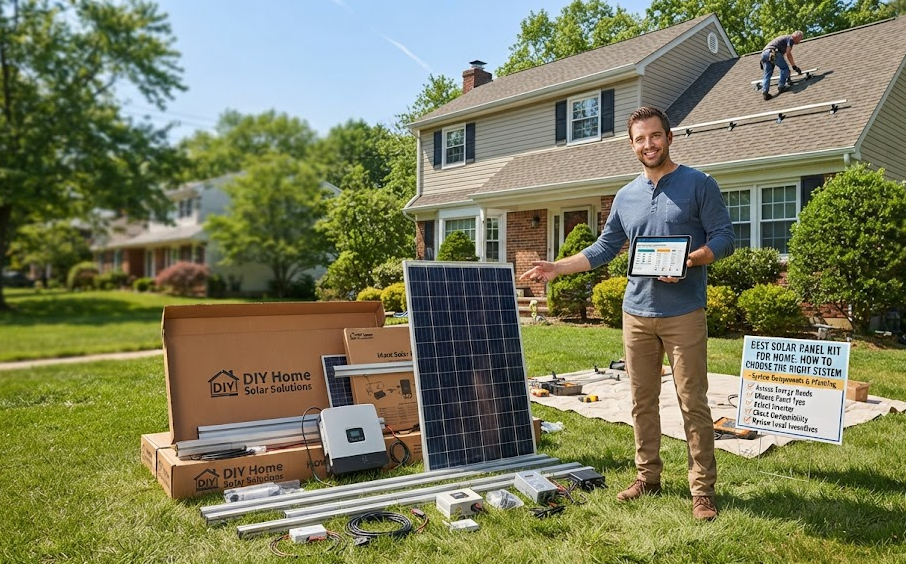
Choosing the best solar panel kit for home use can be an excellent way to reduce electricity costs, increase energy independence, and generate clean electricity directly from your property. A residential solar panel kit typically combines several components needed to produce and manage solar energy, including solar panels, an inverter, mounting equipment, cables, and sometimes a battery storage system. However, choosing the right kit requires more than selecting the panels with the highest advertised wattage. Homeowners should consider their electricity consumption, available roof or ground space, local sunlight conditions, system size, equipment quality, installation requirements, and budget. The right solar panel kit should provide enough energy to meet the household’s needs while offering reliable performance for many years.
What Is a Solar Panel Kit for Home Use?
A home solar panel kit is a collection of solar energy equipment designed to work together as a residential power-generation system. A typical kit includes photovoltaic panels that convert sunlight into electricity, an inverter that converts the electricity into a form household appliances can use, mounting hardware, electrical cables, and other necessary equipment. Some complete solar kits also include batteries for storing excess electricity. The exact contents vary depending on whether the system is designed for grid-connected, hybrid, or off-grid applications. Homeowners should carefully review what is included before purchasing because some kits may advertise a low equipment price while excluding important components. A complete residential solar kit should be evaluated based on the total system requirements rather than the number of panels alone.
Determine How Much Solar Power Your Home Needs
The first step in choosing the best solar panel kit is determining how much electricity your household consumes. Review your recent electricity bills to calculate your average monthly and daily electricity usage. Electricity consumption is commonly measured in kilowatt-hours, or kWh. A household that uses considerably more electricity will generally require a larger solar system than a smaller home with lower consumption. Roof orientation, shading, geographic location, and available sunlight also affect the amount of electricity a solar system can produce. Homeowners should avoid purchasing a kit solely because it has a large number of panels. Instead, the system should be sized according to actual household energy requirements and local solar conditions.
Compare Solar Panel Efficiency and Quality
Solar panel efficiency is another important consideration when comparing residential solar panel kits. More efficient panels can produce more electricity from the same amount of available roof space. This can be particularly valuable for homes with limited roof area. However, efficiency should not be the only factor considered. Homeowners should also examine the panel’s power rating, degradation rate, product warranty, performance warranty, and manufacturer reputation. Quality solar panels are expected to produce electricity for decades, so long-term performance can be more important than a small difference in initial purchase price. Comparing the complete specifications can help homeowners identify a solar kit that balances performance, reliability, and cost.
Choose the Right Solar Inverter
The inverter is one of the most important components of a residential solar system because it converts the electricity generated by the panels into usable household electricity. Solar panel kits may use string inverters, microinverters, or other inverter configurations. Microinverters can be particularly useful on roofs where shading or panel orientation varies because each panel can operate more independently. String inverter systems can provide an efficient and potentially cost-effective configuration when panels receive relatively consistent sunlight. Homeowners should also consider inverter efficiency, warranty coverage, monitoring capabilities, and compatibility with battery storage. Choosing an appropriate inverter is essential because even high-quality solar panels cannot deliver their full potential if the system’s power electronics are poorly matched.
Consider a Solar Panel Kit With Battery Storage
Homeowners who want greater energy independence may consider a solar panel kit that includes battery storage. A battery can store excess electricity generated during the day and make that energy available after sunset or during certain power outages. Battery storage can be particularly useful for households with high evening electricity consumption or unreliable grid service. However, adding a battery increases the cost and complexity of a solar installation. Homeowners should compare usable battery capacity, power output, efficiency, lifespan, warranty coverage, and compatibility with the solar inverter. A battery is not necessarily required for every home, so the decision should be based on energy needs and financial objectives.
Grid-Tied, Hybrid, or Off-Grid Solar Kits
The best solar panel kit also depends on how the homeowner intends to use the system. Grid-tied solar kits connect to the utility grid and are generally designed to reduce electricity purchased from the utility. Hybrid solar kits combine solar panels, grid electricity, and battery storage, providing greater flexibility. Off-grid solar kits are designed for properties without dependable access to utility electricity and generally require sufficient battery storage and system capacity to meet demand when solar production is low. Understanding these configurations is important before purchasing a kit because equipment requirements can differ significantly.
Compare the Total Solar Panel Kit Cost
Price is an important consideration, but homeowners should compare the complete cost rather than focusing only on the advertised kit price. Expenses may include solar panels, inverters, mounting equipment, batteries, wiring, installation, permits, electrical upgrades, and other project costs. A less expensive kit may not provide the same equipment quality, warranty coverage, or performance as a more comprehensive system. Homeowners should request detailed estimates and compare the total installed cost of multiple systems. Evaluating the expected electricity production and long-term savings alongside the upfront price can provide a better understanding of the system’s potential value.
Final Thoughts
The best solar panel kit for home use is the one that matches the property’s electricity needs, available space, sunlight conditions, budget, and long-term energy goals. Before purchasing, homeowners should evaluate system size, panel efficiency, inverter technology, battery options, warranties, installation requirements, and total cost. A high-quality residential solar kit can provide reliable electricity generation for many years while potentially reducing dependence on utility power. However, the cheapest kit is not always the best investment, and the largest system is not necessarily the most appropriate. Careful comparison and proper system sizing are essential for achieving good long-term value. By evaluating the entire solar system rather than individual components, homeowners can make a more informed decision and choose a solar panel kit that fits their property and energy requirements.