
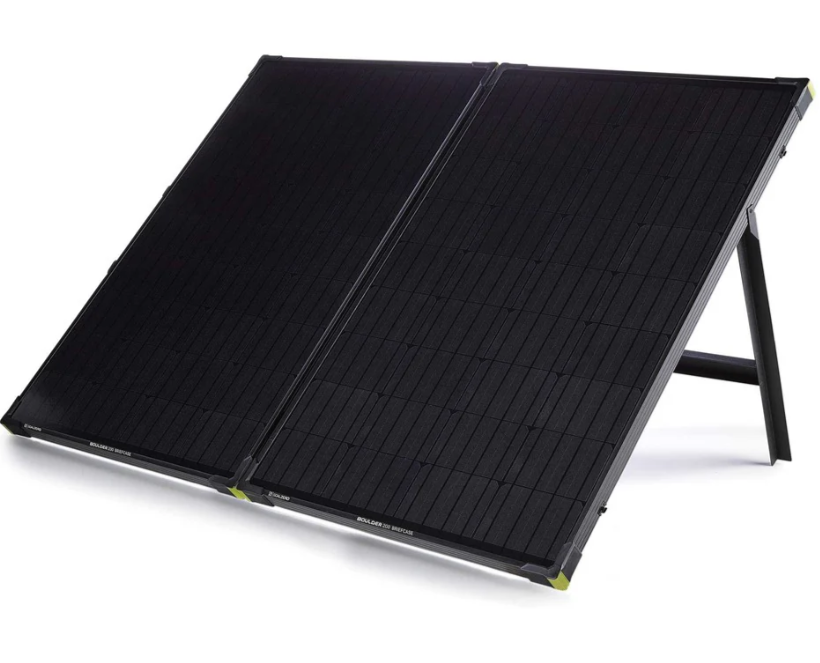
Foldable solar panels
Foldable solar panels are becoming an increasingly popular option for people who want access to renewable electricity without installing a permanent solar energy system. Unlike traditional rooftop panels, foldable solar panels are designed for portability, allowing users to transport, store, and position them wherever sunlight is available. Their compact design makes them useful for camping, RV travel, outdoor activities, emergency preparedness, and small off-grid applications. As solar technology becomes more accessible, foldable panels offer an attractive combination of convenience, flexibility, and affordability for consumers who need portable power.
What Are Foldable Solar Panels?
Foldable solar panels are photovoltaic panels designed with hinges, flexible connections, or multiple connected sections that allow the unit to fold into a smaller package. When unfolded, the panels can be positioned toward the sun to generate electricity. Many models include built-in stands or support mechanisms that make it easier to adjust the panel’s angle. Some foldable solar panel kits also include cables, connectors, charge controllers, or adapters for connecting to batteries and portable power stations. Their design makes them considerably easier to transport than many conventional rigid solar panels. Depending on their size and power rating, foldable panels can be used to charge personal electronics, batteries, portable power stations, and selected low-power appliances.
The Convenience of Foldable Solar Panels
Convenience is one of the strongest advantages of foldable solar panels. Because they can be folded and transported, users can take solar power to locations where traditional electrical outlets may not be available. Campers can use them to recharge phones, lights, cameras, and other equipment, while RV owners can use larger models to supplement their electrical systems. Foldable solar panels can also be valuable during emergencies when grid electricity is temporarily unavailable. Their portability allows users to move the panels throughout the day to improve exposure to sunlight. When the panels are not needed, they can be folded and stored in a vehicle, garage, storage area, or camping equipment compartment. This flexibility makes portable solar energy practical for many situations.
Affordability Compared With Permanent Solar Systems
Another important advantage of foldable solar panels is their relatively accessible entry cost compared with a complete residential rooftop solar installation. A permanent home solar system can involve panels, inverters, mounting equipment, electrical work, permits, installation labor, and potentially battery storage. A foldable solar panel can provide a smaller-scale alternative without requiring permanent installation. Buyers can start with a modest system and expand their portable power equipment as their needs change. However, affordability depends on the panel’s wattage, efficiency, construction quality, accessories, and whether a battery or portable power station is included. Consumers should compare the complete system cost rather than focusing exclusively on the advertised panel price.
Foldable Solar Panels With Battery Storage
Combining a foldable solar panel with battery storage can make portable solar power considerably more useful. During sunny conditions, the panel can charge a compatible battery or portable power station. Stored electricity can then be used after sunset or when sunlight is temporarily unavailable. This arrangement allows users to separate electricity generation from electricity consumption. When selecting a battery, consumers should consider capacity, measured in watt-hours or kilowatt-hours, as well as charging compatibility and maximum solar input. The panel, battery, and power station should have compatible voltage, current, and connector specifications. A properly matched system can provide a convenient source of renewable electricity for outdoor activities and emergency situations.
How to Choose an Affordable Foldable Solar Panel
When shopping for a foldable solar panel, buyers should consider more than the initial price. Important factors include power output, panel efficiency, weight, folded dimensions, durability, weather resistance, connectors, warranty, and compatibility with batteries or portable power stations. Higher-wattage panels generally provide greater electricity production but may be heavier and less convenient to transport. Smaller panels may be easier to carry but can take longer to recharge a battery. Consumers should select a system based on their actual energy requirements rather than automatically choosing the largest or cheapest option.
Final Thoughts
Foldable solar panels provide an appealing combination of convenience, portability, and affordability for consumers seeking flexible renewable energy. They can be useful for camping, RVs, travel, emergency backup, remote work, and other situations where conventional electricity is unavailable. Their ability to fold into a compact package makes transportation and storage easier, while their relatively simple setup allows users to generate electricity without installing a permanent solar system. For greater flexibility, a foldable solar panel can be paired with an appropriately sized battery or portable power station. By comparing power output, efficiency, portability, durability, compatibility, and total cost, consumers can find a foldable solar panel that provides practical value while making solar energy more accessible.